
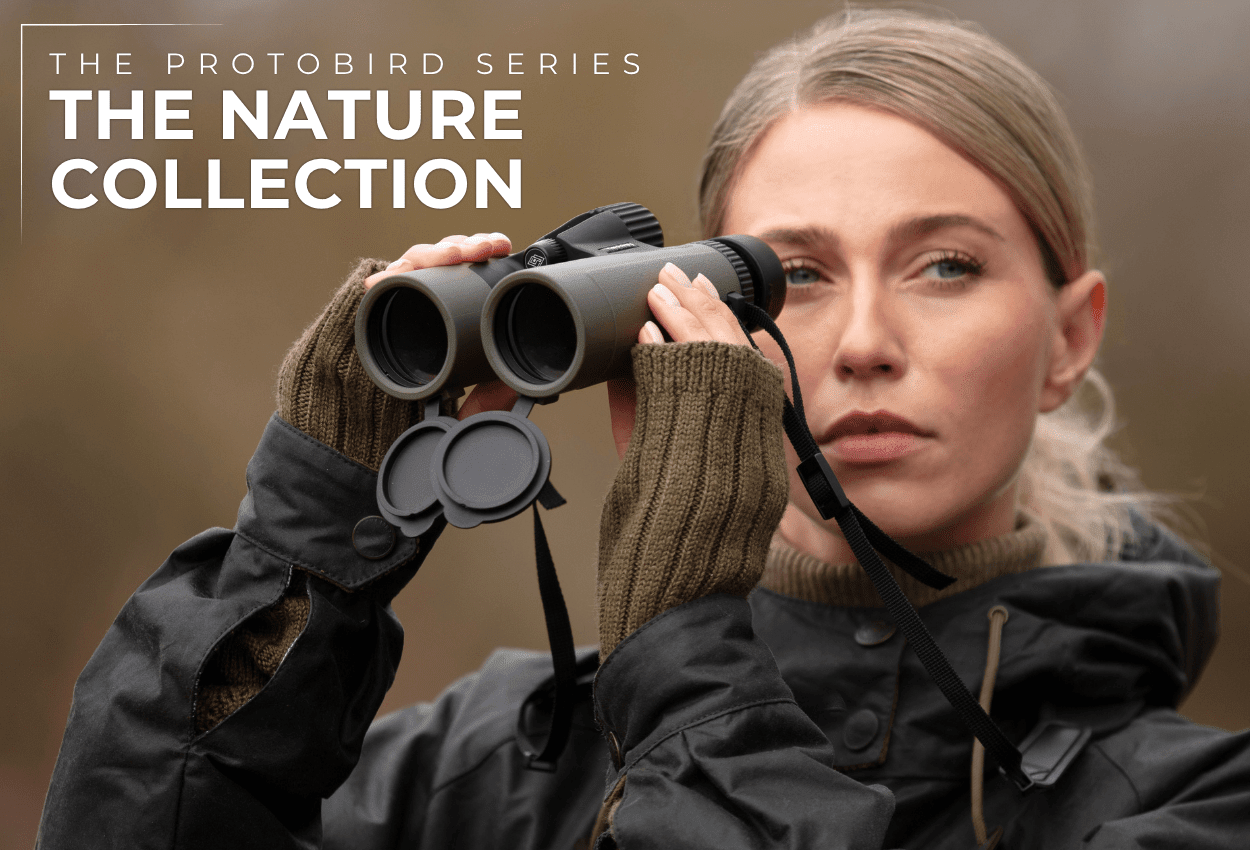
If you're choosing between 8x42 and 10x42 binoculars, you're asking one of the most common — and most important — questions in optics. Both are excellent all-round sizes, but they suit different situations and different users. The good news is there's no wrong answer — it simply comes down to how and where you watch. Here's everything you need to know.
What the Numbers Mean
The first number is magnification: 8x means objects appear 8 times closer, 10x means 10 times closer. The second number (42) is the diameter of the objective lens in millimetres — this determines how much light enters the binocular, affecting brightness and low-light performance. Both 8x42 and 10x42 share the same lens size, so the key difference is purely in magnification — but that single difference has a ripple effect across several performance characteristics.
The Case for 8x42
8x42 binoculars are widely considered the most versatile all-round choice, and for good reason:
- Wider field of view — at 8x you see more of the scene at once, making it easier to locate and track fast-moving subjects like a sparrowhawk threading through a hedgerow or a kingfisher skimming a river
- Steadier image — lower magnification means hand tremor has less impact, so the image stays sharp without a tripod, even after a long walk
- Better in low light — the exit pupil (the beam of light reaching your eye) is larger at 8x, giving a brighter image at dawn and dusk when many species are most active
- More comfortable for extended use — less eye strain over long sessions in the field, whether you're doing a full-day reserve visit or a morning woodland walk
- Better eye relief — 8x42 binoculars typically offer longer eye relief, making them a more comfortable choice for spectacle wearers
The PROTOBIRD 8x42 is built around these strengths. It excels in woodland birding, mixed-terrain wildlife watching, and any situation where you need to react quickly to fast-moving subjects.
The Case for 10x42
10x42 binoculars give you a meaningful step up in magnification, which matters in specific situations:
- Open landscapes — scanning waders across a mudflat, watching raptors over moorland, or following wildfowl on a large estuary all benefit from the extra reach
- Identification at range — that extra magnification can make the difference between confidently identifying a distant bird and losing it in the heat haze
- Stationary subjects — when you're scanning slowly across a hillside or watching a perched bird of prey, the steadiness trade-off matters far less
- Detail work — for moth trapping, dragonfly identification, or any situation where fine detail is critical, 10x gives you a meaningful advantage
The PROTOBIRD 10x42 is the natural choice for open-country specialists and anyone who regularly watches at distance. Paired with a steady hand or a tripod adapter, it delivers exceptional reach without compromising on optical quality.
Side by Side: PROTOBIRD 8x42 vs 10x42
| PROTOBIRD 8x42 | PROTOBIRD 10x42 | |
|---|---|---|
| Magnification | 8x | 10x |
| Field of view | Wider | Narrower |
| Image stability | Better handheld | More sensitive to shake |
| Low-light performance | Slightly brighter | Slightly dimmer |
| Eye relief | Longer | Shorter |
| Best for | Woodland, mixed terrain, beginners, glasses wearers | Open country, coastal, estuaries, distance work |
 Which Should You Choose?
Think about the habitats you visit most often and the subjects you watch. Here's a quick guide:
The 8x42 may suit you if you:
- Watch mostly in woodland, scrub, or mixed terrain
- Follow fast-moving birds like warblers, raptors in flight, or waders on the move
- Wear glasses or find eye strain an issue on long days out
- Want one binocular that handles a wide range of situations confidently
The 10x42 may suit you if you:
- Spend most of your time on open ground — estuaries, moorland, coastal reserves
- Prioritise identification at distance over tracking speed
- Already own an 8x and want a dedicated long-range tool
- Are happy to take a moment to steady the binocular before viewing
Both PROTOBIRD models share the same optical quality and build — whichever you choose, you're getting a binocular built to perform in the field for years to come.
Still not sure? Get in touch and we'll help you find the right match for the way you watch.

Leave a comment
This site is protected by hCaptcha and the hCaptcha Privacy Policy and Terms of Service apply.