
There’s a small, magical world just outside your window! Whether you live in a bustling city or a quiet village, the UK is home to an incredible cast of avian characters.
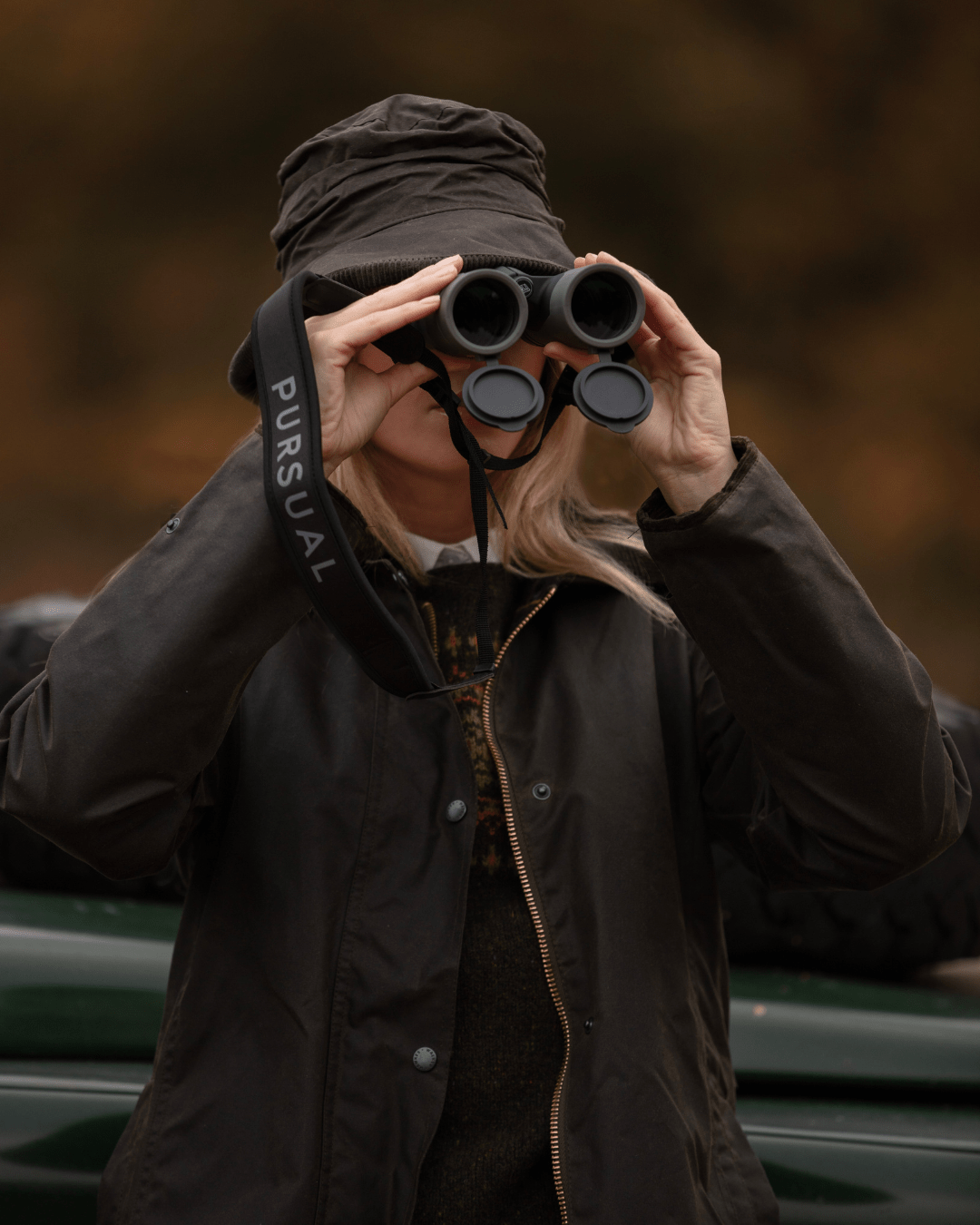
For anyone looking to put those new binoculars to use, or simply to appreciate the feathered visitors to your garden, here is a breakdown of the most common and beloved birds you are likely to see.
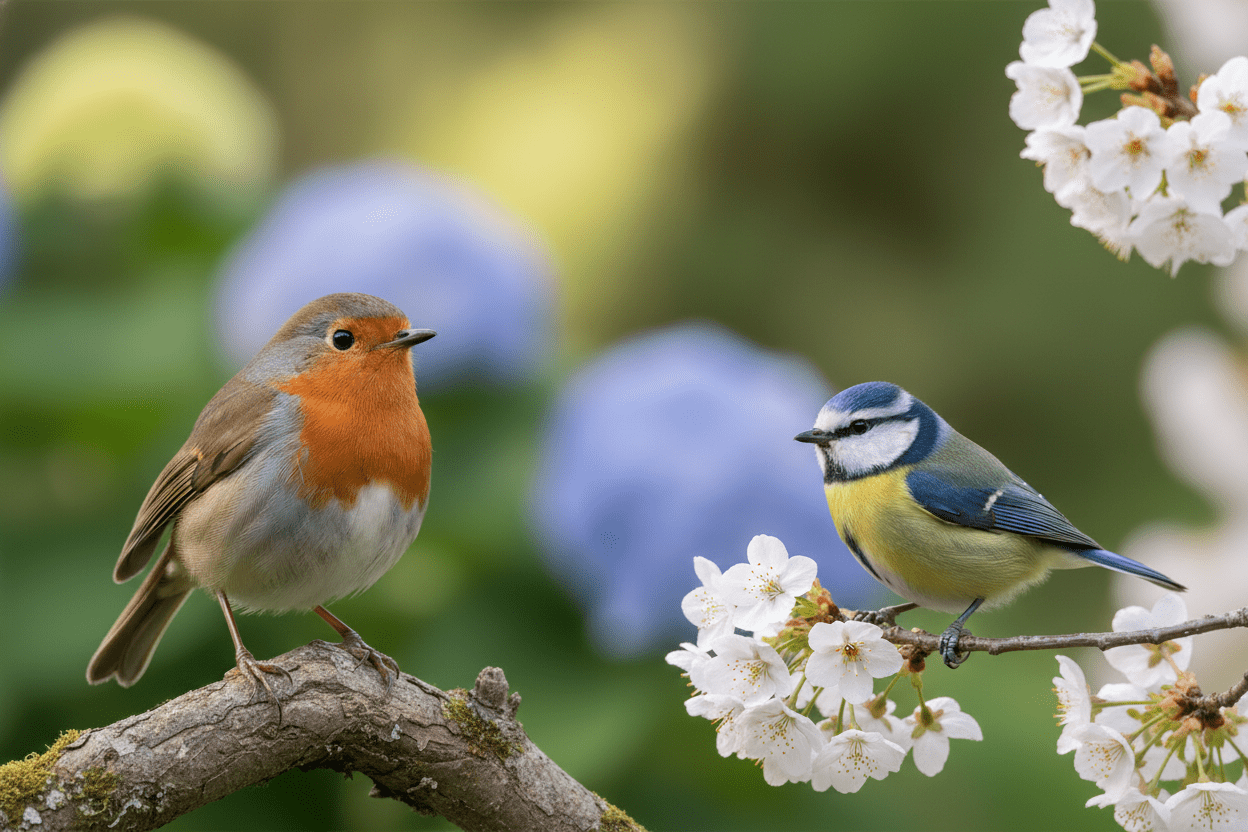
1. The Red-Breasted Icon: The European Robin
The Robin is arguably the most famous and friendly bird in Britain, often associated with Christmas cards and gardening.
-
Look For: An unmistakable, vibrant red/orange breast contrasting with a grey belly and brown back.
-
Behaviour: They are curious and fiercely territorial, often hopping close to gardeners looking for worms unearthed by a spade. They also sing year-round, making them a welcome sound in the deepest winter.
-
Where to Find Them: Usually found feeding on the ground, often near bird tables rather than hanging feeders.
2. The Charming Cheeky Titmouse: Blue Tit & Great Tit
The Blue Tit and the Great Tit are the acrobats of the bird feeder, frequently visiting gardens throughout the year.
Blue Tit
-
Look For: A beautiful mix of blue, yellow, white, and green plumage. The bright blue cap and yellow breast make it instantly recognisable.
-
Behaviour: Known for its agility, often hanging upside-down on peanut feeders and fat balls.
Great Tit
-
Look For: The largest of the Tit family. It has a glossy black head with white cheeks, and a black stripe running down its yellow breast.
-
Behaviour: Look out for its distinctive two-syllable, 'teacher-teacher' call. It’s slightly bolder than its blue cousin.
3. The Glossy Ground Feeders: Starling & Blackbird
These species are often overlooked but boast a hidden beauty and are some of the most numerous birds in the country.
Starling
-
Look For: From a distance, they look plain black, but in sunlight, their feathers shimmer with iridescent green and purple hues, often dappled with small white spots, especially in winter.
-
Behaviour: Highly social and noisy, they often arrive at feeders in chatty groups. In late autumn and winter, look to the skies at dusk for their spectacular, swirling mass displays known as murmurations.
Blackbird
-
Look For: The male is jet black with a striking yellow/orange beak and eye-ring. The female is brown and may be lightly speckled.
-
Behaviour: They are classic ground feeders, often seen foraging on lawns, tossing leaf litter aside in search of insects and worms. The male’s mellow, flute-like song is one of the most beautiful sounds of the UK spring.
4. The Finches: House Sparrow & Goldfinch
The Finch family brings a variety of sizes and colours to the UK garden.
House Sparrow
-
Look For: A small, streaky, robust brown bird. The male has a distinct grey cap and black 'bib' (throat patch).
-
Behaviour: They are extremely gregarious and noisy, living up to their name by gathering in chirping flocks around houses, bushes, and guttering. Despite being the most frequently sighted bird in many garden surveys, their population is sadly in long-term decline.
Goldfinch
-
Look For: A stunning bird with a bright red face and a bold patch of yellow across its black wings.
-
Behaviour: They are drawn specifically to fine seeds like Nyjer seeds and thistle heads. If you plant Teasels in your garden, you're almost guaranteed a visit from these exquisite birds.
💡 Birdwatching Tip for Beginners
When you spot a new bird, don't just focus on the colour! Ask yourself these questions:
-
Size: Is it smaller than a Robin? Bigger than a Blackbird?
-
Shape: Is its tail long (like a Magpie)? Or short and cocked up (like a Wren)?
-
Behaviour: Is it hopping on the ground? Perching upside-down on a feeder? Flitting quickly through a hedge?
Happy birding!

Leave a comment
This site is protected by hCaptcha and the hCaptcha Privacy Policy and Terms of Service apply.