
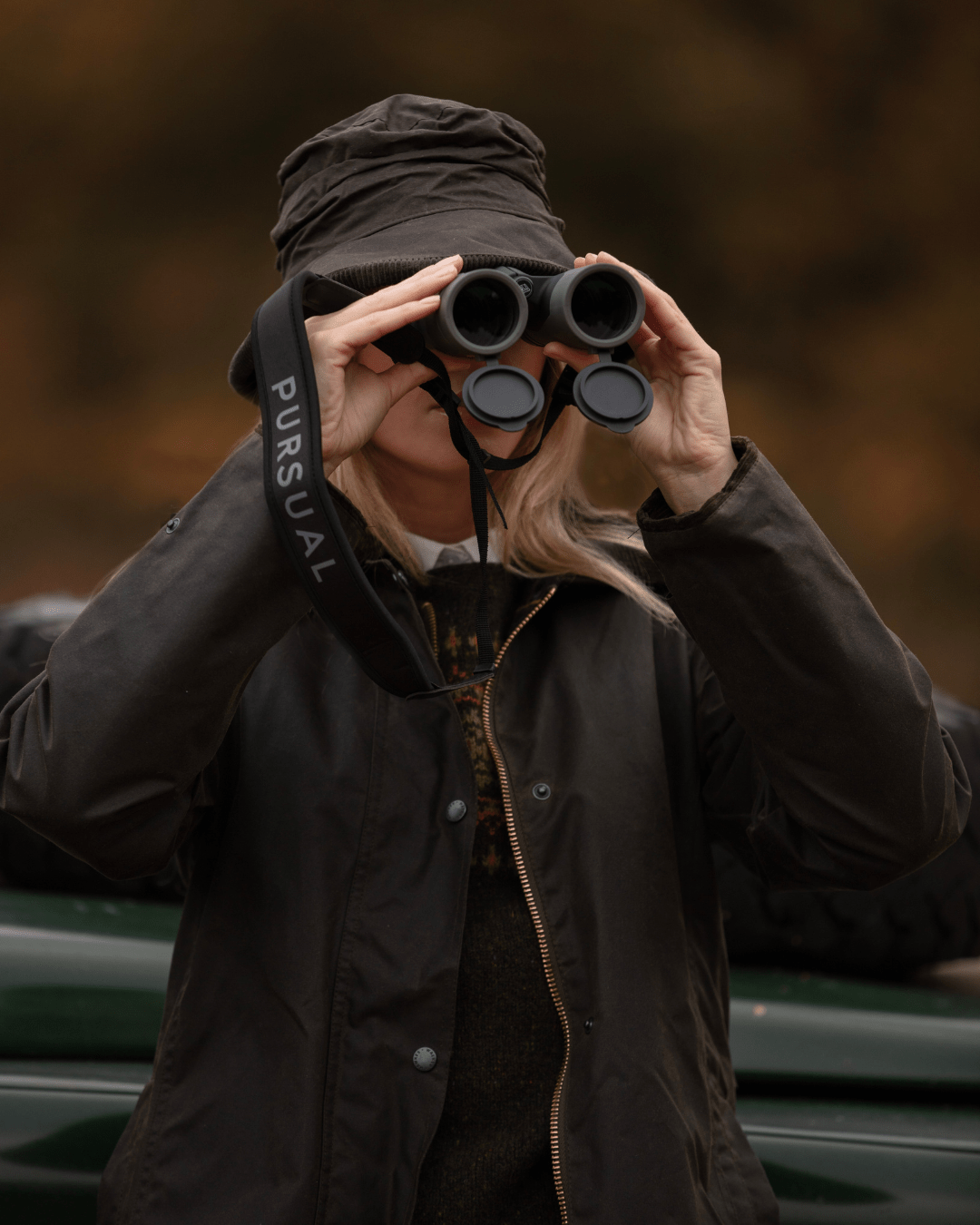
Choosing your first pair of binoculars can feel like decoding a foreign language: 8x42, 10x25, BaK-4 — where do you even start? Whether you're hoping to spot a rare bird in the garden, watch a deer at the treeline, or bring a distant ship into focus, the right pair of binoculars changes everything. Here's what actually matters when you're buying your first set.
What Do the Numbers Actually Mean?
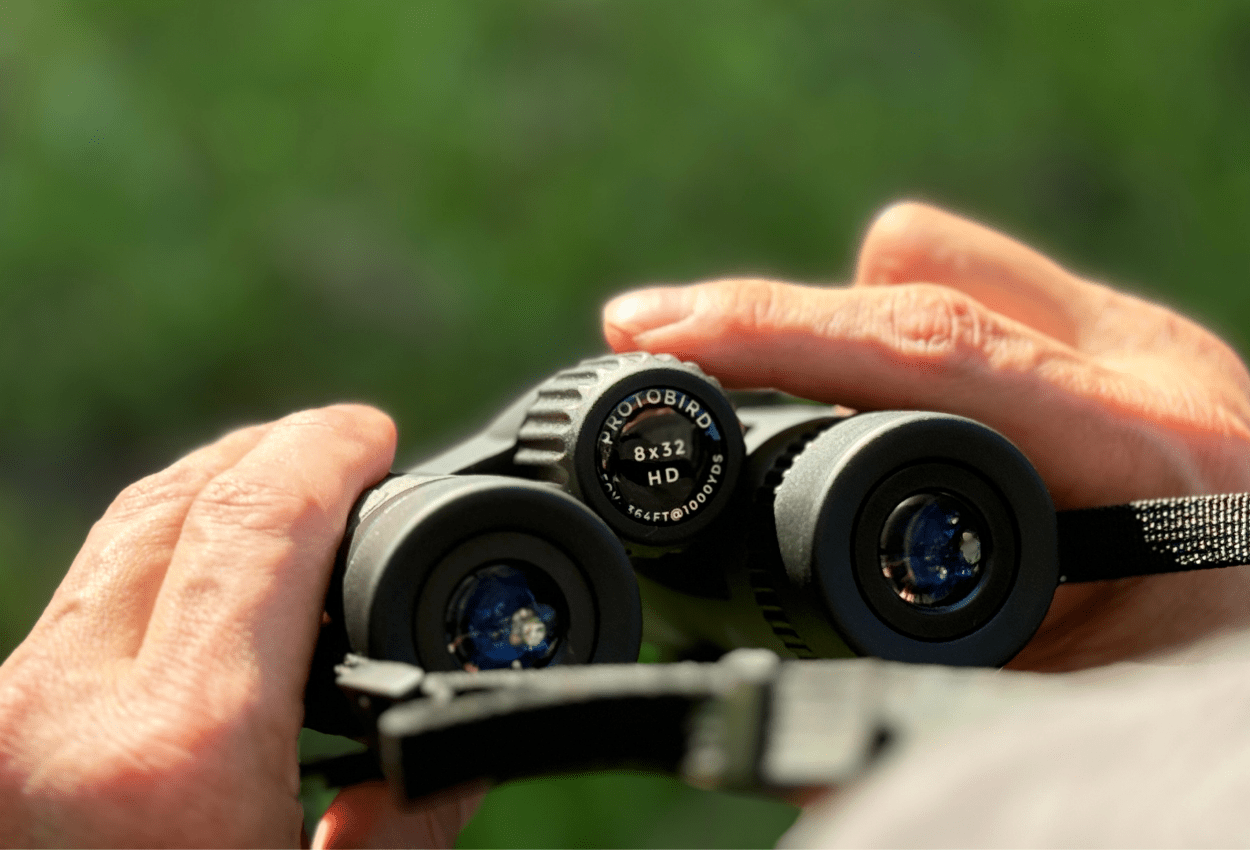
Every pair of binoculars carries two numbers, separated by an "x" — take the PROTOBIRD 10x42 as an example.

- The first number (10x): the power. This is the magnification — a 10x pair makes an object look ten times closer than it appears to the naked eye.
- The second number (42): the light. This is the diameter of the front lens in millimetres. The bigger the number, the more light it lets in, and the brighter your image will be — especially at dawn or dusk.
For a first pair, 10x42 is the gold standard: bright, stable and easy to use. A higher first number gives you more reach, but can be slightly harder to hold steady if your hands aren't used to it yet.
Why a Wider Field of View Helps Beginners
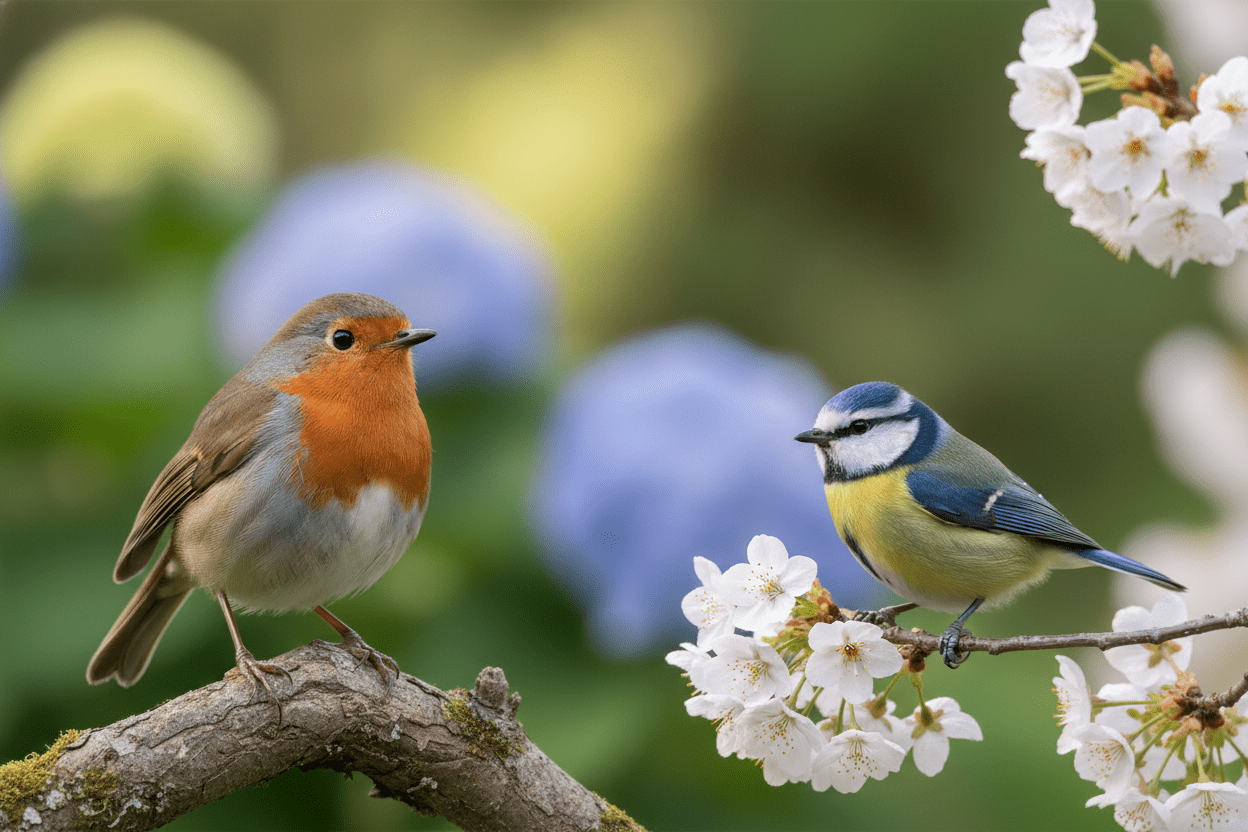
Imagine trying to find a small, fast-moving bird through a drinking straw — that's what a narrow field of view feels like in practice.

For your first pair, look for a wide field of view. It makes it far easier to locate a bird or animal in the trees before it moves on. Our FOREFRONT and PROTOBIRD ranges are specifically designed with a wide view, helping you find your subject fast rather than hunting for it.
Glass Quality: Why Some Binoculars Cost £50 and Others £500
It comes down to what's inside. Budget binoculars often use plastic or low-grade glass, which can leave the image looking milky or slightly yellow-tinted.
At Pursual, every pair starts with BaK-4 prisms as our baseline — a high-density glass that keeps the image a perfect circle and sharp from edge to edge. If you want the full HD experience, look for ED glass, found in our ECHOBIRD range, which removes the faint rainbow-coloured fringing you can sometimes see around dark objects against a bright sky.
Portability vs. Performance
Where you'll be using them matters just as much as the specifications:
- The garden or hide birder: weight matters less than brightness — go for a 42mm lens.
- The all-day hiker: your neck will thank you for a 32mm lens. It's smaller and lighter but still packs enough punch for daytime viewing.
If You Wear Glasses: Check the Eye Relief
If you wear glasses, you need to look at eye relief. You want a number of 15mm or higher. This allows you to twist down the eyecups and see the whole picture without taking your glasses off. All Pursual binoculars feature twist-up eyecups for exactly this reason.

Which Pursual Binoculars Are Right for You?
| If you are... | We recommend... | Why? |
|---|---|---|
| Just starting out in the garden | FOREFRONT 10x42 | Simple, rugged, and great value |
| A serious weekend hiker | PROTOBIRD 8x32 | Lightweight and crystal clear |
| A dedicated wildlife watcher | ECHOBIRD 10x42 | Our best glass, for total immersion |
Ready to Find Your Focus?
Choosing your first pair shouldn't be stressful. Remember, the best binoculars are the ones you actually have with you when that rare moment happens.

Leave a comment
This site is protected by hCaptcha and the hCaptcha Privacy Policy and Terms of Service apply.