
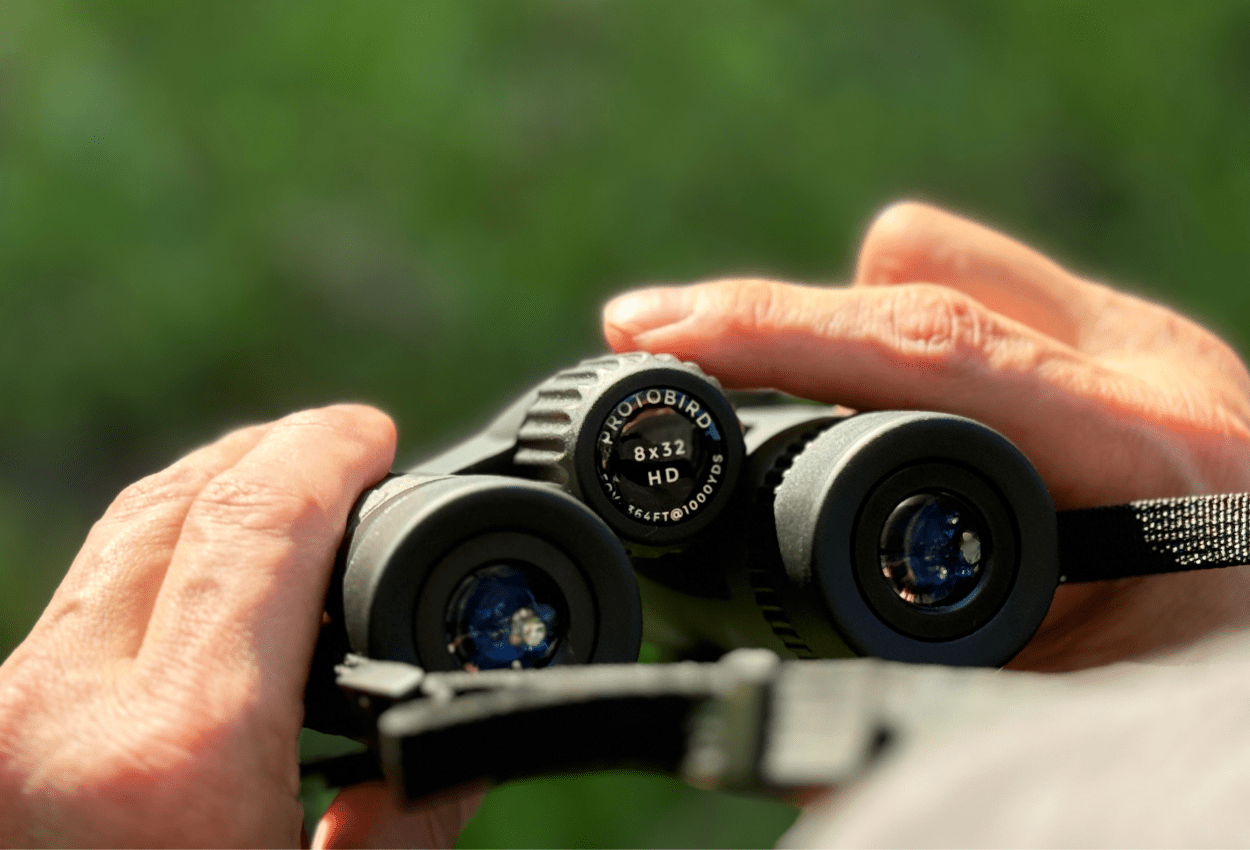
If you've ever looked at a pair of binoculars, you've probably noticed numbers like 8x42, 10x50, or 7x35 printed on them. These numbers aren't just random specifications—they're crucial indicators that tell you exactly how the binoculars will perform. Understanding what these numbers mean is essential for choosing the right binoculars for your needs, whether you're birdwatching, stargazing, attending sporting events, or enjoying nature.
The Two Key Numbers Explained
Binocular specifications always consist of two numbers separated by an 'x'. For example, in 8x42 binoculars, the first number (8) represents the magnification power, and the second number (42) represents the objective lens diameter in millimeters. Let's break down each of these numbers in detail.
Magnification Power: The First Number
The first number indicates how many times closer an object will appear compared to viewing it with the naked eye. If you're using 8x binoculars, an object 800 meters away will appear as if it's only 100 meters away. Similarly, 10x binoculars make objects appear ten times closer than they actually are.
Common magnification powers include 7x, 8x, 10x, and 12x. Each has its advantages and ideal use cases. Lower magnifications like 7x or 8x provide a wider field of view and are easier to hold steady without a tripod. They're excellent for general use, wildlife observation, and situations where you need to track moving objects. Higher magnifications like 10x or 12x bring distant objects much closer but require steadier hands or a tripod for the best viewing experience, as any hand movement is also magnified.
It's important to understand that higher magnification isn't always better. Beyond 10x magnification, image stability becomes a significant challenge when hand-holding binoculars. The slightest tremor in your hands gets magnified along with the image, making it difficult to maintain a clear, steady view. This is why many experienced users prefer 8x or 10x for most applications—they offer an excellent balance between magnification and usability.

Objective Lens Diameter: The Second Number
The second number refers to the diameter of the objective lenses (the larger lenses at the front of the binoculars) measured in millimeters. In 8x42 binoculars, the objective lenses are 42mm in diameter. This measurement is crucial because it determines how much light the binoculars can gather.
Larger objective lenses collect more light, which results in brighter, clearer images, especially in low-light conditions such as dawn, dusk, or overcast days. Common objective lens sizes include 25mm, 32mm, 42mm, and 50mm. Compact binoculars typically have smaller objectives (25mm-32mm), making them lightweight and portable but less effective in dim lighting. Full-size binoculars usually feature 42mm or 50mm objectives, providing excellent light-gathering capability and image brightness.
However, larger objective lenses also mean heavier and bulkier binoculars. A pair of 10x50 binoculars will be significantly heavier than 10x25 binoculars. This is an important consideration if you plan to carry your binoculars for extended periods, such as during hiking or long birdwatching sessions.
Exit Pupil: The Hidden Specification
While not always printed on the binoculars, the exit pupil is a critical specification that you can easily calculate from the two main numbers. The exit pupil is the diameter of the beam of light that exits the eyepiece and enters your eye. You calculate it by dividing the objective lens diameter by the magnification power.
For example, 8x42 binoculars have an exit pupil of 5.25mm (42 ÷ 8 = 5.25). Similarly, 10x50 binoculars have an exit pupil of 5mm (50 ÷ 10 = 5). The exit pupil size matters because it needs to match the size of your eye's pupil for optimal viewing.
In bright daylight, the human pupil contracts to about 2-3mm in diameter. In low light conditions, it can dilate to 5-7mm, depending on your age (younger people typically have larger maximum pupil dilation). For daytime use, an exit pupil of 3-4mm is perfectly adequate. For dawn, dusk, or nighttime viewing, an exit pupil of 5mm or larger is ideal as it allows all available light to enter your eye.
This is why astronomy binoculars often have large exit pupils—they're designed for use in dark conditions when your pupils are fully dilated. Conversely, compact binoculars with small exit pupils work fine during the day but may appear dim in low-light situations.
Field of View: Seeing the Bigger Picture
Field of view (FOV) refers to the width of the area you can see through the binoculars at a specific distance, usually measured at 1,000 meters or 1,000 yards. It's typically expressed in meters (e.g., 120m at 1,000m) or as an angle in degrees.
Generally, lower magnification binoculars provide a wider field of view, making it easier to locate and track moving subjects like birds or wildlife. Higher magnification binoculars have a narrower field of view, which can make it challenging to find and follow fast-moving objects but provides more detail once you've located your subject.
A wide field of view is particularly valuable for activities like birdwatching, sporting events, and general nature observation where you need to scan large areas or follow action. A narrower field of view is acceptable for activities like astronomy or detailed observation of stationary subjects where you're focusing on specific objects.

Common Binocular Configurations and Their Best Uses
8x32 Binoculars
The 8x32 configuration represents an excellent middle ground between compact and full-size binoculars. With a 4mm exit pupil (32 ÷ 8 = 4), these binoculars perform well in most daylight conditions and are suitable for moderate low-light use. They're significantly lighter and more compact than larger models, making them ideal for hiking, travel, and extended carrying where weight matters.
The 8x magnification provides a stable, wide field of view that's perfect for birdwatching, nature observation, and general outdoor activities. Many experienced users consider 8x32 the sweet spot for all-day carry binoculars, offering impressive optical performance without the bulk and weight of larger models. Our PROTOBIRD 8x32 HD Binoculars and ECHOBIRD 8x32 ED Binoculars are excellent examples of this versatile configuration, designed specifically for birdwatchers who need portability without compromising on image quality.
8x42 Binoculars
The 8x42 is one of the most popular all-round configurations for wildlife and birdwatching. The larger 42mm objective lens delivers a generous exit pupil of 5.25mm (42 ÷ 8 = 5.25), making it an excellent choice for low-light conditions at dawn and dusk when many species are most active. Combined with the stable, wide field of view that 8x magnification provides, it's a highly versatile binocular that handles everything from fast-moving birds in flight to scanning open moorland.
If you want the brightness of a full-size objective without stepping up to 10x magnification, the 8x42 is the natural choice. Our PROTOBIRD 8x42 in Woodland Khaki and PROTOBIRD 8x42 in Urban Grey are built for exactly this — waterproof, fog-proof, and designed for the varied conditions of the British countryside.
10x42 Binoculars
These binoculars offer more magnification while maintaining excellent light-gathering capability. The exit pupil is 4.2mm, which is still adequate for most conditions. The extra magnification is beneficial when you need to see more detail at distance, such as for serious birdwatching or wildlife observation. However, the higher magnification makes them slightly more challenging to hold steady, and the field of view is narrower than 8x models.
The 10x42 configuration is particularly popular among birdwatchers who want to identify distant species or observe fine plumage details. Both our PROTOBIRD 10x42 HD Binoculars and ECHOBIRD 10x42 ED Binoculars exemplify this configuration, offering the perfect balance of magnification and brightness for serious nature enthusiasts who demand exceptional optical performance.
10x50 Binoculars
With a 5mm exit pupil, these binoculars excel in low-light conditions, making them popular for astronomy, marine use, and dawn/dusk wildlife observation. The larger objective lenses gather plenty of light, producing bright, clear images. However, they're significantly heavier than 42mm models, which can lead to arm fatigue during extended use. Many users prefer to mount these on a tripod for comfortable viewing.
8x25 or 10x25 Compact Binoculars
These compact models are lightweight and highly portable, perfect for travel, concerts, theater, and casual outdoor use. The small objective lenses mean they don't perform as well in low light, and the exit pupils are quite small (3.1mm for 8x25, 2.5mm for 10x25). However, their convenience and portability make them excellent for situations where you want binoculars available but don't want to carry heavy equipment.
7x35 Binoculars
This classic configuration offers a wide field of view and a generous 5mm exit pupil. The lower magnification makes them very easy to hold steady and excellent for marine use, where a stable image is crucial on a moving boat. They're also popular for general outdoor activities and are often recommended for beginners due to their ease of use.
Factors to Consider When Choosing Binoculars
Your Primary Activity
Different activities benefit from different specifications. Birdwatchers often prefer 8x32 or 10x42 configurations for the balance of magnification, portability, and field of view. For example, if you're planning long hiking trips where weight is a concern, the PROTOBIRD 8x32 offers exceptional portability. If you need more magnification for detailed observation, the ECHOBIRD 10x42 provides superior reach while maintaining excellent image brightness.
Astronomers might choose 10x50 or even 15x70 for the light-gathering power and magnification. Sports spectators might opt for compact 8x25 or 10x25 models for portability. Hunters often select 8x42 or 10x42 for versatility across various lighting conditions.
Lighting Conditions
If you'll primarily use your binoculars in good daylight, smaller objective lenses are perfectly adequate. For dawn, dusk, forest, or nighttime use, larger objectives (42mm or 50mm) with exit pupils of 5mm or larger will provide significantly better performance. The 10x42 configuration, like our PROTOBIRD and ECHOBIRD models, strikes an excellent balance for varied lighting conditions throughout the day.
Portability vs. Performance
There's always a trade-off between optical performance and portability. Larger binoculars with bigger objective lenses provide better images, especially in low light, but they're heavier and bulkier. Consider how you'll carry and use your binoculars. If you're hiking long distances, weight matters—this is where 8x32 models excel. If you're viewing from a fixed location or vehicle, you can prioritize optical performance with 10x42 or larger configurations.
Stability and Magnification
Most people can comfortably hand-hold binoculars up to 10x magnification. Beyond that, image shake becomes problematic, and a tripod or image stabilization becomes necessary. If you want higher magnification, consider whether you're willing to use a tripod or invest in image-stabilized binoculars. Both 8x32 and 10x42 configurations are well within the comfortable hand-holding range for most users.

Additional Specifications to Understand
Close Focus Distance
This is the minimum distance at which the binoculars can focus clearly. It's particularly important for butterfly watching, flower observation, or any close-range viewing. Some binoculars can focus as close as 2 meters, while others require 5-10 meters or more.
Eye Relief
Eye relief is the distance between the eyepiece and your eye where you can still see the full field of view. This is crucial if you wear eyeglasses. Look for binoculars with at least 15-17mm of eye relief if you wear glasses, as this allows you to see the entire field of view without removing your glasses.
Prism Type
Binoculars use either Porro prisms or roof prisms. This affects the shape and optical characteristics but not the numbers on the binoculars. Porro prism binoculars have a traditional offset shape and often provide better depth perception. Roof prism binoculars are more compact and streamlined but typically more expensive for equivalent optical quality.
Practical Tips for Using Your Binoculars
Once you understand the numbers, here are some tips for getting the best performance from your binoculars. First, adjust the interpupillary distance (the spacing between the eyepieces) to match your eyes. The image should merge into a single circular view. Second, focus properly by closing your right eye and focusing the center wheel until the left image is sharp, then close your left eye and use the diopter adjustment (usually on the right eyepiece) to focus the right image. This compensates for any difference between your eyes.
Keep your binoculars steady by bracing your elbows against your body or resting them on a solid surface. For extended viewing sessions with larger binoculars, consider using a tripod adapter. Clean your lenses carefully with proper lens cleaning materials—never use your shirt or rough materials that could scratch the coatings.
Conclusion
Understanding what the numbers on binoculars mean empowers you to make an informed choice based on your specific needs. The magnification (first number) determines how close objects appear, while the objective lens diameter (second number) affects light-gathering ability and image brightness. Together, these numbers determine the exit pupil, which should match your intended lighting conditions.
Whether you choose the lightweight portability of an 8x32 configuration like our PROTOBIRD 8x32 or ECHOBIRD 8x32, or the enhanced magnification of a 10x42 model like our PROTOBIRD 10x42 or ECHOBIRD 10x42, understanding these specifications helps you select the perfect binoculars for your adventures. Whether you're watching birds at dawn, observing wildlife, attending sporting events, or exploring the night sky, there's a perfect pair of binoculars with the right numbers for your needs.
Remember that while the numbers are important, they're not the only factors that determine binocular quality. Optical quality, build construction, waterproofing, and coating quality all play significant roles in overall performance. However, understanding the numbers gives you the foundation to narrow down your choices and find binoculars that will serve you well for years to come.
Ready to find your perfect pair? Browse the full Pursual range — from the lightweight PROTOBIRD 8x32 to the premium ED glass of the ECHOBIRD 10x42 — and find the binoculars built for the way you watch.

Leave a comment
This site is protected by hCaptcha and the hCaptcha Privacy Policy and Terms of Service apply.