
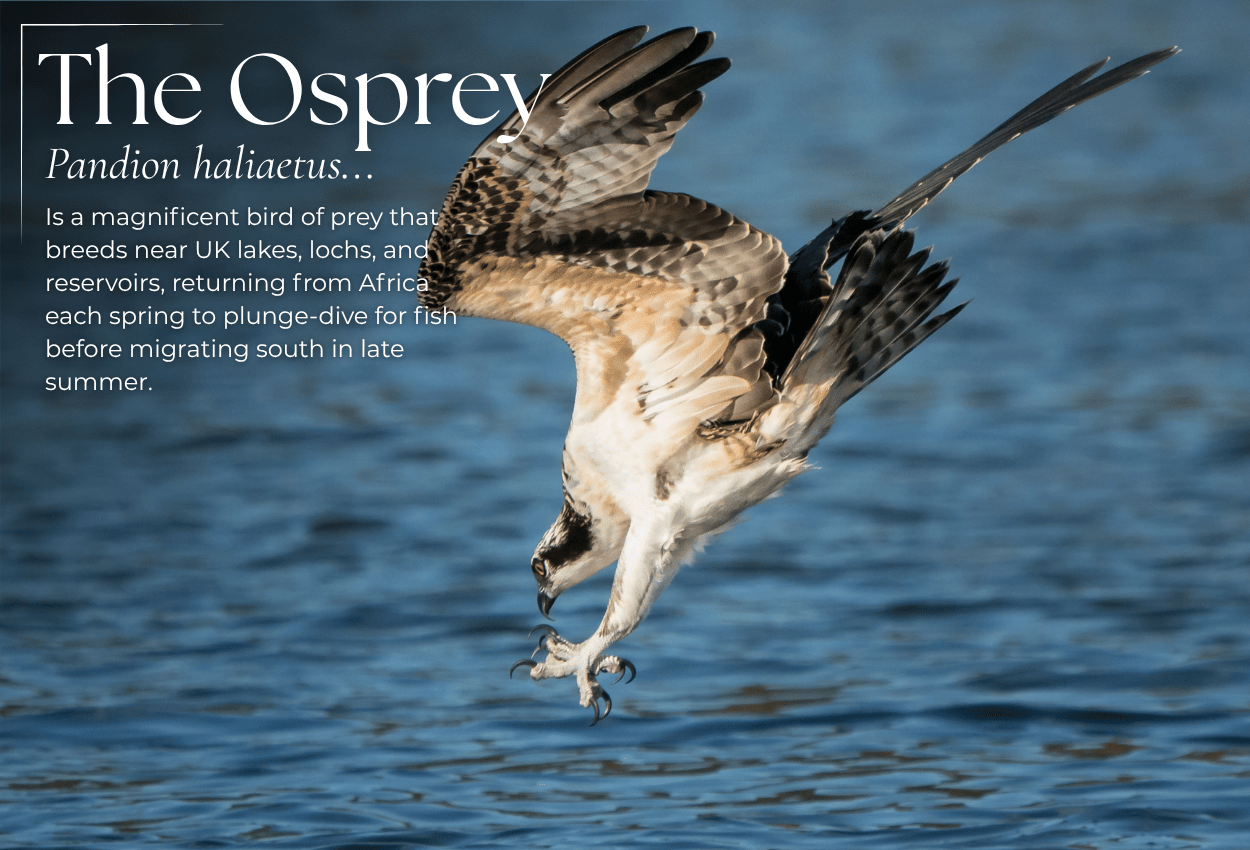
Few sights in British wildlife match the drama of an osprey hunting. A wingspan stretching nearly two metres, a near-vertical dive from height, and then — if you're lucky — the explosive splash as talons hit water. July is one of the best months to witness it: chicks are growing fast at nest sites across Scotland, Wales, and England, and adults are making dozens of fishing runs each day to keep up with demand.
You don't need to travel far or get lucky. With the right locations and a decent pair of binoculars, osprey watching is one of the most reliably spectacular wildlife experiences the UK has to offer.
Why July Is the Best Month for Osprey Watching
Ospreys arrive in the UK from West Africa in late March and April, and by July the breeding season is in full swing. Chicks hatched in May are now large and demanding — which means adults are hunting constantly, often making four to six fishing trips a day. This high activity makes July the most rewarding month for observation: you're almost guaranteed to see hunting behaviour rather than simply a bird sitting on a distant nest.
By late August, juveniles begin their first migration south, so July represents the sweet spot — peak activity before the season winds down.
Where to Watch Ospreys in the UK
Loch Garten, Cairngorms National Park
The most famous osprey site in the UK. The RSPB's Loch Garten Osprey Centre has hosted a breeding pair almost continuously since 1959, and the nest is viewable via live camera and from a dedicated hide. The surrounding Abernethy Forest is exceptional for other species too — crested tit, Scottish crossbill, and red squirrel are all possible.
Rutland Water, Leicestershire
England's most successful osprey reintroduction site. The Rutland Osprey Project has established a thriving population here, and the reserve offers hides with direct views of active nests. Multiple pairs now breed annually, making sightings almost guaranteed in July.
Dyfi Osprey Project, Mid Wales
Home to Monty and his successive mates, the Dyfi project has become one of the most watched osprey nests in the world. The visitor centre at Cors Dyfi Nature Reserve offers live nest cameras and guided viewing — ideal if you're new to osprey watching.
Kielder Water, Northumberland
A growing population in the north of England, with nest platforms visible from the reservoir's walking trails. Less crowded than the Scottish sites and a beautiful setting in its own right.
Bassenthwaite Lake, Cumbria
The Lake District's resident ospreys have bred here since 2001. Viewing points are managed by the Lake District Osprey Project, with rangers on hand during the season to help visitors locate birds.

What to Look For
Ospreys are unmistakable once you know what you're looking for. In flight, look for the distinctive kinked wing shape — unlike most raptors, ospreys hold their wings in a shallow M or gull-like angle. The underside is white with a dark carpal patch at the wrist, and the head is white with a broad dark eye stripe.
When hunting, ospreys will circle high above open water — often 30 to 50 metres up — before hovering briefly and then diving feet-first. The dive is fast and committed; a successful strike sees the bird disappear beneath the surface before emerging, usually with a fish held headfirst to reduce drag.
Watch for the fish carry back to the nest — this is often the most dramatic moment, with the osprey flying low and direct, prey clearly visible in its talons.

Choosing the Right Binoculars for Osprey Watching
Ospreys spend much of their time at height or at distance across open water, which means magnification and light-gathering ability both matter. Here's how our range maps to osprey watching:
For most osprey watchers: The PROTOBIRD 10x42 is the natural choice. The 10x magnification brings distant birds in close, and the 42mm objective lens gathers enough light for comfortable viewing even in the variable conditions you'll encounter at open water sites. Available in Urban Grey and Woodland Khaki.
For serious birders and those wanting the best: The ECHOBIRD 10x42 uses ED (extra-low dispersion) glass to eliminate chromatic aberration — the colour fringing that can affect image quality when tracking a fast-moving bird against a bright sky. If you're watching ospreys regularly or photographing through your binoculars, the optical step up is immediately noticeable.
For those who prefer a lighter setup: The PROTOBIRD 8x42 (available in Urban Grey and Woodland Khaki) trades a little magnification for a wider field of view and easier handheld stability — useful when tracking a bird in fast, unpredictable flight. A good choice if you're also using your binoculars for general wildlife watching beyond dedicated osprey sites.

Shop PROTOBIRD 8x42 in Woodland Khaki →
Tips for a Successful Visit
- Arrive early. Ospreys are most active in the first few hours after dawn, when fish are closer to the surface and competition from other anglers is lower.
- Use a hide where available. Most managed sites have hides that allow you to get much closer without disturbing the birds. Book in advance where required.
- Be patient at the nest. If you can see an active nest, watch it consistently rather than scanning — adults return regularly and the approach is often the most dramatic moment.
- Bring a tripod or monopod. At 10x magnification, even slight hand movement is amplified. A support makes extended watching far more comfortable.
- Check the weather. Ospreys fish less in heavy rain and strong wind. Overcast but calm conditions are often ideal — soft light, active birds.
Plan Your Visit
Most managed osprey sites are free to visit, though some hides require booking or a small donation. The RSPB, Wildlife Trusts, and local osprey projects all publish live nest updates and visitor information during the season — worth checking before you travel.
July is the month to go. The birds are active, the days are long, and with the right binoculars, you'll see detail that makes the experience genuinely unforgettable.

Leave a comment
This site is protected by hCaptcha and the hCaptcha Privacy Policy and Terms of Service apply.